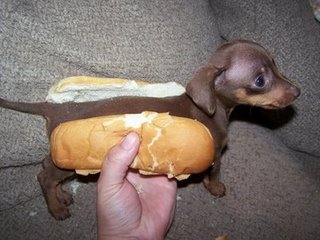
How about a caption? Leave yours in the comments below…

The #1 Hot Dog Cart "How To" Guide
How about a caption? Leave yours in the comments below…
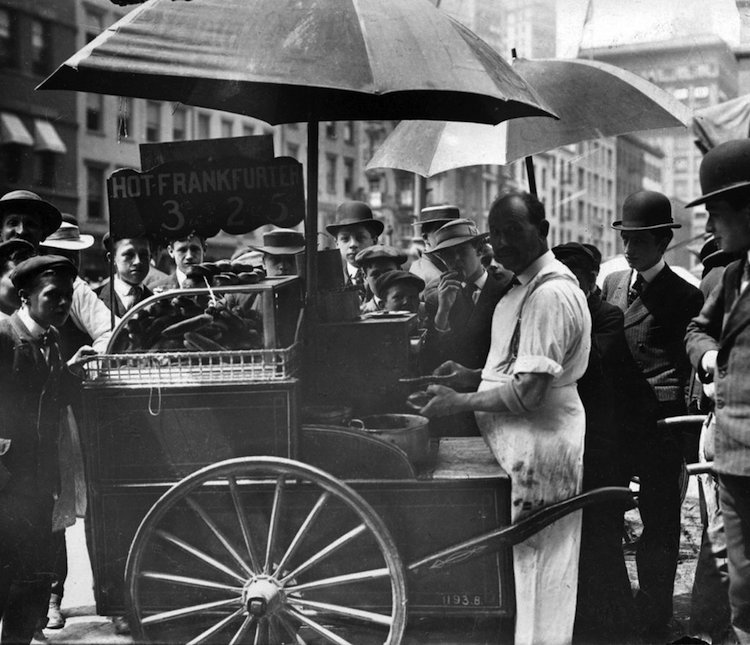
There was a man who lived by the side of the road and sold hot dogs. He sold very good hot dogs. He put up signs along the highway and advertised in the newspaper telling how good they were. He stood on the side of the road and cried: “Buy a hot dog, mister?” And people bought. He increased his meat and bun orders. He bought a bigger stove to take care of his trade. He finally got his son home from college to help him out.
But then something happened. Continue reading “The Parable of the Hot Dog Cart”
Guelph, Ontario, Canada
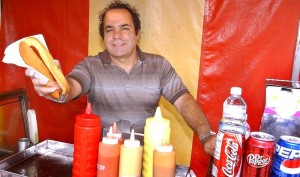
Lorne Warmington has operated a hot dog cart in the city of Guelph for 18 years with no competition – until now. This city requires that hot dog cart operators bid for the right to sell hot dogs in the city park, and for 18 years Mr. Warmington had no challengers, so bidding high wasn’t neccessary…
That is until Mr. Warmington was notified that he was outbid. He said in protest that if he knew there was another bidder, he would have raised his bid accordingly – to no avail.
The new kid in town is Moe Ghomishah (pictured above), and Lorne was forced to move on down the road to a new spot, but his devoted customers have stated that they will follow Lorne and his hot dogs wherever they end up.
The lesson? A good product and even better service are essential to repeat business and loyal customers. Start interacting with customers in a friendly manner from day one. It’s more fun and just good business.
For more tips on operating your own hot dog carts, visit www.HotDogProfits.com.
Later,
-Steve
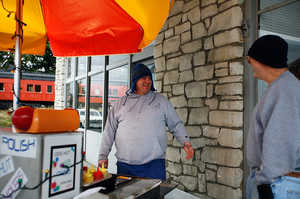
Cory Bakker is a former concrete worker who has been running his own hot dog cart, “The Hot Dog Hut”, for two years in Bellingham, Washington. He got the idea after watching a morning talk show story about the hot dog cart business. What appealed to him was the social aspect, sort of like being a bartender without the hassles that come with serving alcohol.
“I love talking, and it’s amazing what sort of conversations you have throughout the day out here,” Bakker said. “At some point, I’m going to have to write them down for a book.”
One of Corey’s challenges is that hot dog carts are not quite as familiar to folks in Washington state as they are to people in places such as New York or Chicago. He hopes to see more people open hot dog carts in Bellingham and believes it would ultimately help his own business.
If anyone wants to help Cory out by becoming his competition, you can get started by listening to the free hot dog cart podcasts on this website.
-Steve
P.S. Selling hot dogs is a lot easier on the knees than pouring concrete…
Ted’s Charbroiled Hots began as a sandwich shop in an old tool shed, selling food to local constuction workers. In 1927 the building was sold to a young immigrant who operated a horse drawn hot dog cart in a nearby park.
(Note: Thankfully, the health regulations are much better nowadays. If any of you can get a horse drawn hot dog cart approved by your local health inspector, I’ll give you a free copy of “Carts of Cash – The #1 Hot Dog Cart Start Up Guide”.) Good luck!
 Anyways, this guy was able to grow his business from a single cart to a chain of 8 brick and mortar locations across western New York and an additional location in Arizona.
Later,
Steve
From Diner’s Journal by Kim Severso
If we need more signs of how bad it is out there for cooks, let’s turn to the Hot Dog Indicator.
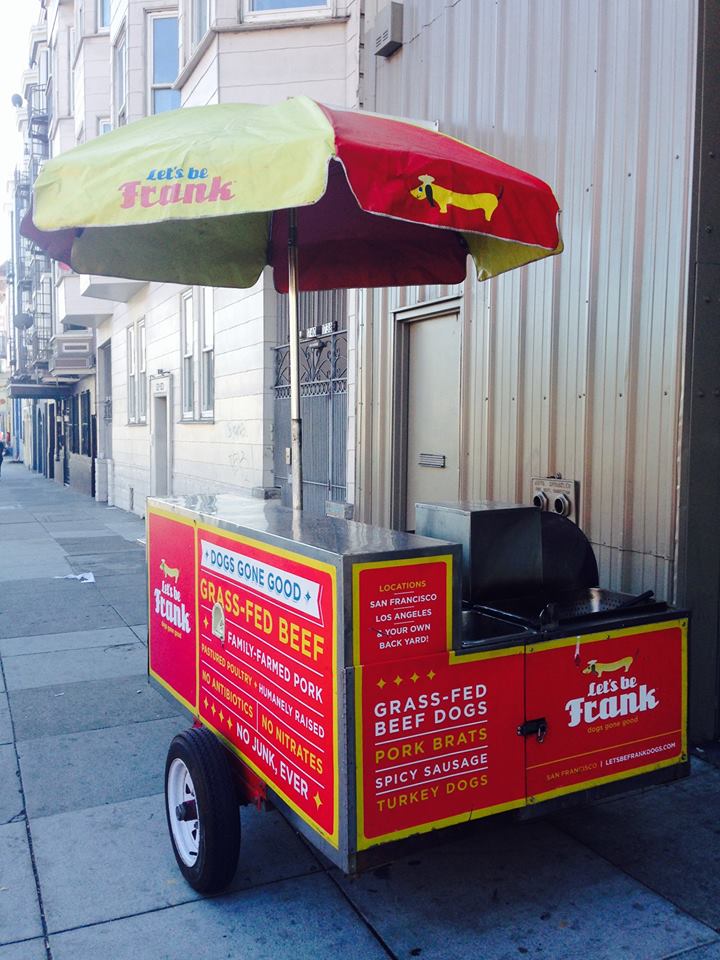
Larry Bain and Sue Moore, who run hot dog carts in San Francisco and Los Angeles, were looking for some part time help. Now mind you, their “Let’s Be Frank” carts are up the culinary scale. The dogs and brats are made from pasture-raised beef from the Panorama rancher cooperative and humanely raised pork. They’re served with fresh grilled onions on buns from Acme Bakery. The job pays $11 to $13 depending on experience, plus tips. Not bad for a job at a hot dog stand, but it’s slinging weenies for a living.
They posted the job on Craigslist and within two hours they had seven resumes from people with serious culinary educations and cooking chops.
The applicants had, variously, 15 years experience in hotel restaurant kitchens, fluency in French and Italian, experience in cruise ships kitchens, and as corporate chefs and executive chefs.
And almost all of them had expensive culinary degrees from places like the Culinary Institute of America in Hyde Park, N.Y., or Le Cordon Bleu at the Orlando Culinary Academy. -end-
********************************
As this article clearly shows, the times are right for starting or expanding your hot dog cart business. Quality help is plentiful right now. If you haven’t gotten your business started yet, or need to know the tips and tricks that the pros use to manage multiple carts, check out my hot dog cart training materials.
-Steve
I just ran across an established hot dog cart business for sale in Bakersfield, CA. It’s located in front of a busy Lowe’s home improvement center and has annual sales of $92,000. Not bad.
The owner has listed this business through a broker, and it is a franchise operation, so there are some extra costs involved which bring the profit margins down to 40% which is really low (the average independent hot dog cart operator keeps 60% to 70% of profits). The asking price is $89,000.
Good deal? If you apply the usual business valuation formulas such as setting the asking price as a multiple of revenue or EBIDTA (Earnings Before Interest, Depreciation, Taxes, and Amortization), possibly. But I’m not so sure. Here’s why…
With a little bit of knowledge, you could duplicate this business almost anywhere in the country with start up costs under $5000. With a little more knowledge, you could do it for $1500. You would save $87,500.
That’s what I teach regular folks to do every day. People with no previous business experience. Would you pay $500 to learn how to do this? (Hint: You won’t have to pay nearly that much.)
Where can you get this knowledge? Right here: How to Start a Hot Dog Cart Business.
To your success,
Steve
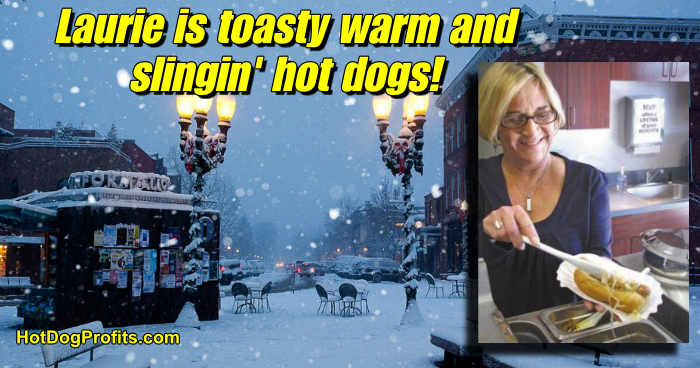
Laurie Booth remembers a hot dog cart on every corner near her childhood home in Queens, New York.
And at every cart, the street vendors were serving up boiled Sabrett hot dogs, most with a traditional red onion sauce on top. The name Sabrett is synonymous with a top quality New York dog for Booth, who recently brought the brand to Laurie’s New York Dirty Dogs.
After operating a hot dog cart outside, Booth recently moved indoors at the motorcycle dealership where she has a year-round hot dog operation. She believes the Sabrett’s dogs are the best tasting product around and travels to the factory on Long Island to buy them. “They’re boiled and when you bite into them, they have a snap to them and they’re natural beef,” Booth said.
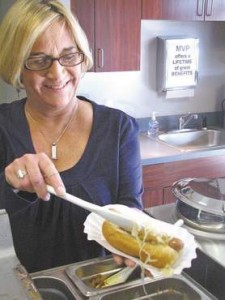 The hot dogs are actually called New York Dirty Water Dogs because they are boiled and the water looks dirty due to the juices from the dog, Booth said. She worried the description of dirty water might turn people away from trying her product, so she shortened the title to simply “dirty dogs.”
Booth used to help her sister-in-law who had a little hot dog truck in New York. When Booth’s job at Shaw’s supermarkets corporate headquarters was eliminated a few years back, she used her severance package to buy a hot dog cart.
“It was always something I wanted to do coming from New York,” she said.
She spent a few years outside a motorcycle dealer in North Hampton before moving to her current location. Her cart was recognizable for the yellow and blue umbrella of all Sabrett’s hot dog carts.
“This year, coming here, was a fabulous year,” she said, adding she brought her cart to a special drive-in movie night at the motorcycle dealer. “It was a very successful summer this year.”
Booth makes the trip to the factory on Long Island every six to eight weeks for a new supply of dogs. She has a huge freezer in which to store them.
“Everything here is from New York except the rolls,” she said.
Her stand features the authentic Sabrett hot dogs, homemade soups, nachos and soft pretzels. She is still working to get the word out to customers that she has moved inside for the winter and says people are usually surprised to see her in the lobby of the dealership. Many stop in for a snack at the stand while they await work to be completed on their cycle, she said.
For hot dog toppings, customers can try the traditional red onion sauce that is made with a sweet tomato sauce base and the red onions. She also has chili, cheese, sauerkraut, onions, mustard, relish, ketchup and hots.
A new homemade soup is offered each day, made fresh by her husband Jim, an avid cook. “He is an Italian who loves to cook,” she said.
While Booth loves Sabrett’s dogs, she also loves meeting her customers. “I love my job. I love people; I’m in my element here.”
attribution:
Lara Bricker
seacoastonline
Note to Treasury Department: Here is one industry that will not be needing a bailout.
Hot dogs are holding their own.
Sales are up by 1.5 percent nationwide on prepared dogs and 4 percent on the cook-at-home variety from the grocery store, according to the National Hot Dog and Sausage Council, a division of the American Meat Institute. (P.S. to Treasury: Trade associations, too, seem to be flourishing.)
These are not exactly boom numbers, but given the circumstances — what is going on with home prices and new cars and retail sales — a positive hot dog index is as good as it gets in this economy.
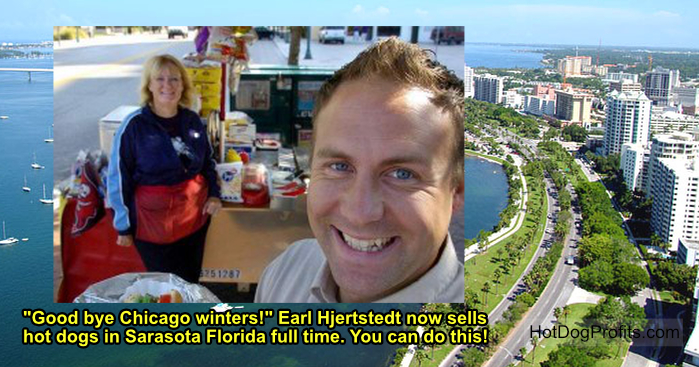
Earl Hjertstedt Jr., who has been in the dog business in Sarasota for two years this month, has a theory about why hot dogs are doing so well, and it’s not just because they are cheap, though that helps. Cheap, of course, is relative. A Chicago dog all the way will cost you $3.50 at his Tasty Take-Out cart on Main Street, just across from the Herald-Tribune. Add chips and a soda, as most people do, and it’s five bucks for lunch at the cart, roughly the cost of any number of drive-in value combos.
But hot dogs, explains Earl Jr., who is 28, are “heritage.”
“You look back at old photographs from the ’20s or ’30s of any city and there’s always a hot dog stand. Times get tough, people go to what’s familiar.”
Earl Sr. introduced his son to hot dogs 25 years ago and Earl Jr. swears he still remembers the experience. “It was at a place called Portillo’s in Chicago, and I can remember what the counter looked like, and what the bun was like, and I can remember the bright green relish that was like, ‘Whoa.’”
The remarkable color of the relish is part of what identifies the Hjertstedt special as an honest-to-goodness Chicago dog, as does the thick pile of other garnishes that top it all off: diced onions and tomatoes, mustard, a spear of dill pickle, chopped hot peppers if you want ’em, and finally, a dash of celery salt.
“In Chicago, it’s called dragging the dog through the garden,” says Earl Jr. “A dog with everything you can think of. Except ketchup. Typically, the Chicago dog does not have ketchup.”
Tomato sauce of any kind would make it a Michigan dog, a variety most often associated with beanless chili and bright orange cheese.
The classic New York hot dog eschews red ingredients altogether, as served up with mustard and sauerkraut for $2 around the corner at the Sabrett stand in front of the Sarasota main post office.
There’s even a classic Los Angeles dog, the Hoffy all-beef weiner as served since 1939 at Pink’s on Melrose and La Brea avenues. This being California, the Pink’s dog is longer and thinner than the chubby sausages Easterners are used to.
Unlike the New York or Chicago dogs, the L.A. version is typically skinless. When you bite in, there is none of the snap you get from the stiff casing on the Sabrett’s weiner, or the all-beef Vienna frank that Chicago prefers.
This, says Earl Jr., is the real challenge of hot dog marketing in a place like Sarasota, where everybody is from somewhere else and one man’s hot dog is another’s abomination on a bun.
Sarasota does not have its own signature hot dog, unless it’s with mayonnaise, a combination that none of the Hjertstedts had seen before they came here from the Chicago area in 2001.
“Mayonnaise — what’s that all about?” wonders Earl Jr., who endured another five winters up north before joining his parents in Sarasota.
He had been a road surveyor since high school. “In the winter, you’re looking for a curb and you have to chisel through the ice to find it,” Earl Jr. remembers. “Finally, I said, ‘Screw it.’”
He had a friend with a couple of hot dog carts in Chicago, which is how he got the idea, and from the beginning he had in mind staking out the Chicago dog niche.
The New Yorkers tend toward Tracy Johnson at Sabrett’s.
“There’s a guy who works across the street at GTE, I can hear his New York accent coming,” says Johnson. “Sauerkraut and the brown mustard. I have it ready.”
Tracy, 36, was a restaurant waitress in Sarasota for 22 years until 2007, when the last place she worked abruptly shut its doors. This is only her second week in the hot dog game, at the post office location pioneered more than 10 years ago by Sarasota’s dean of the dog, Edwin K. Wisbrun, now retired.
Tracy is a no-nonsense mustard girl. Her husband, Robert Lawson, who has spent all but a few of his 46 years in Sarasota, prefers his dogs slathered with mayo.
“To each his own,” Tracy has learned. “That’s what’s special about hot dogs.
– Attribution Sarasota Herald Tribune